
Habitat & Conservation
|
07/10/2026
Farm Bill 2.0: A Closer Look at the Senate Discussion Draft
Unpacking the Senate Farm Bill Proposal and What It Means for Conservation
by Andrew Schmidt, Director of Government Affairs
Related Articles


It has been almost eight years since Congress last passed a comprehensive, five-year farm bill. On June 23, Senate Agriculture Committee Chairman John Boozman (R-AR) unveiled a 900-page discussion draft that outlines his vision for the farm and conservation programs for the next five years. This comes nearly two months after the House passed its version of the legislation, including many of Pheasants Forever and Quail Forever’s priorities. While significant work remains, Chairman Boozman’s proposal provides an important starting point in Senate negotiations and the clearest picture yet of what a Senate farm bill’s conservation title may look like.
Before we dive into the provisions in the bill, it's important to note that while the discussion draft includes many bipartisan conservation priorities, significant differences remain between Republicans and Democrats. Much of the current debate centers on changes to nutrition policy made through last year’s budget reconciliation legislation. Those issues will need to be resolved if Congress hopes to assemble the bipartisan coalition that has traditionally been required to enact a farm bill. Chairman Boozman has indicated his desire to hold a committee markup sometime before the August recess, which would be the first formal debate of farm bill legislation in the Senate Agriculture Committee since 2018.
Version 2.0 Loading
Chairman Boozman is calling his proposal “Farm Bill 2.0,” a reference to the provisions typically included in a farm bill already enacted through last year’s reconciliation bill, the One Big Beautiful Bill Act (OBBBA/H.R. 1). As part of that legislation, Congress reinvested all remaining conservation dollars from the Inflation Reduction Act of 2022—another reconciliation bill—into the farm bill. The result was billions of dollars now locked into the farm bill’s conservation title, so programs like the Environmental Quality Incentives Program (EQIP) and others had long-term funding to better meet the needs of working lands and rural America. That legislation also provided $70 million for the Voluntary Public Access and Habitat Incentive Program (VPA-HIP), a significant investment in the only federal program dedicated to increasing hunting and fishing access on private lands.
For PF & QF, these achievements addressed two of our top farm bill priorities: long-term conservation funding and investments in VPA-HIP. But there is still work to do. Because of the limitations of the budget reconciliation process, many important provisions could not be included and must be addressed through the traditional farm bill process, which brings us to Farm Bill 2.0.
Strengthening the Conservation Reserve Program
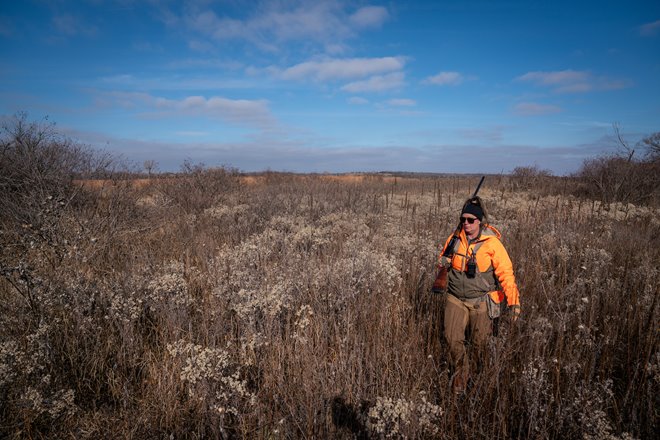
While other major conservation programs have received significant investments in recent years through reconciliation, the Conservation Reserve Program (CRP) has not had any updates since the 2018 Farm Bill and has been operating on short-term extensions since 2023. The House’s farm bill would reauthorize CRP through 2031—an important step to restore the certainty and predictability that producers and landowners need to make decisions for their operations. But more must be done to ensure CRP continues to deliver for farmers, ranchers, and rural communities, which brings us to Chairman Boozman’s bill.
Like the House bill, the Senate draft would reauthorize CRP through 2031. And although the bill maintains the current acreage cap of 27 million acres, it also caps enrollment in the Grassland signup at 12 million acres. With the program now effectively at full enrollment, this would ensure space remains available for acres to be enrolled in the General and Continuous signups, which are at their lowest combined level since 1987. The bill would also ensure that the State Acres for Wildlife Enhancement (SAFE) initiative remains in the Continuous signup where it receives increased incentives and cost-share for high-priority practices.
The bill draft tweaks how CRP rental rates are calculated by better incentivizing the enrollment of marginal and highly erodible land. This will help producers better manage risk and generate stable income on the acres that need it most, boosting their bottom line so they can continue farming their most productive acres. The legislation also modernizes payment limitations on how much an individual producer can receive in rental payments. The current $50,000 cap has not changed since 1985, when CRP was first authorized. The Senate draft would increase this limitation to $125,000 to account for changes in land values, inflation, and other economic factors.
Another key fix in the bill is on cost-share authority. Landowners enrolled in CRP are required to undertake certain management practices—such as prescribed burning, light disking, and other activities—as part of their contract. The Senate draft restores cost-share for these practices after it was eliminated in the 2018 Farm Bill, ensuring landowners have the necessary financial support to implement beneficial management activities. The bill would also extend cost-share authority to the installation of grazing infrastructure, such as fencing and water development, which will help producers access emergency forage during drought as well as encourage landowners to keep land in grass-based production following the end of the contract. Finally, the bill would increase flexibility for emergency haying in times of drought while ensuring there is adequate cover for wildlife and forage for the following year.
If you’ve been tracking the priorities of PF & QF and our partners, many of those provisions might look familiar. That’s because many of them come from the CRP Improvement and Flexibility Act, introduced last year in the Senate by Majority Leader John Thune (R-SD), Ag Committee Ranking Member Amy Klobuchar (D-MN), and Sens. Jerry Moran (R-KS) and Tina Smith (D-MN). Put together, these changes help ensure CRP gives producers the tools they need to manage risk, generate on-farm income, and conserve their more sensitive acres, all while restoring wildlife habitat, improving water quality and soil health, and supporting rural communities.
Improving Program Delivery and Technical Assistance
Outside of CRP, Chairman Boozman’s draft mirrors a lot of what was included in the House bill for other USDA conservation programs. This includes language encouraging greater adoption of precision agriculture by expanding the roles of these technologies and practices within existing programs to help producers make more informed management decisions on their operations. The bill would also strengthen the use of Technical Service Providers—certified third-party experts who help producers design and implement conservation practices—expanding the network of professionals available to assist producers with conservation planning and practice implementation.
The bill would also streamline the Regional Conservation Partnership Program (RCPP), requiring USDA to speed up the process on the front end of partnership agreements and making it easier for partners to access program funding to improve implementation and delivery to producers. But while the draft adds wildlife habitat connectivity as a priority resource concern, it would unfortunately also limit the ability to utilize short-term CRP-like contracts in the program, like those utilized in PF’s Montana Grasslands and Wildlife Corridors RCPP project. Programs like RCPP are most effective when they are as flexible and broad as possible, and we will continue working with the Senate Agriculture Committee to ensure that more—not less—types of conservation activities are included in the program.
Voluntary Conservation Easements
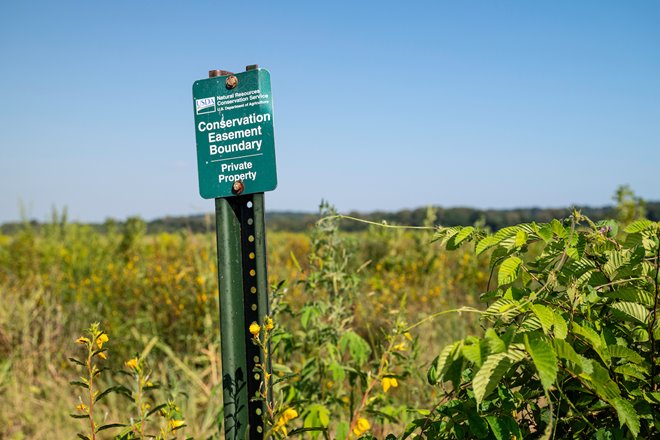
Like the House bill, the Senate draft strengthens voluntary conservation easement programs, which conserve important working lands and wildlife habitat while keeping these lands in private ownership. This includes increasing the federal share of purchasing voluntary easements on ecologically significant and at-risk grasslands. The bill would create and fund a new Forest Conservation Easement Program to increase the conservation and management of working forests. Both provisions will ensure forests and grasslands remain productive, resilient, and beneficial for private landowners, wildlife, and rural communities.
The bill also makes improvements to wetland and floodplain easement programs, placing greater emphasis on long-term stewardship and restoration. These changes recognize that voluntary easements are most successful when paired with ongoing management and stewardship to ensure the land continues to deliver benefits for wildlife, water quality, and flood resilience.
Supporting State Conservation Programs
In addition to programs administered directly by USDA, the Senate draft would also lend support to state-level efforts through a new State Conservation Assistance Program. This program would provide grants up to $5 million to states to cover up to half the cost of a state program that promotes agricultural conservation. This wouldn’t be the first instance of farm bill dollars supporting state agencies working directly with private landowners, as we’ve seen from the success of VPA-HIP. This new program would build on that model by supporting state-level initiatives like the Governor’s Legacy Soil Health and Habitat Program in North Dakota, or the Cattle and Conservation Working Lands Project in Iowa.
The Path Forward
While the conservation title provides plenty of reasons for optimism, the legislative path forward for this legislation remains uncertain. History has shown that successful farm bills are built through bipartisan compromise throughout all 12 titles, and this one will be no exception. Pheasants Forever and Quail Forever will continue working with lawmakers on both sides of the aisle to ensure the final legislation strengthens voluntary conservation programs, supports agricultural producers, and delivers meaningful benefits for wildlife and rural communities.
Your cart is empty